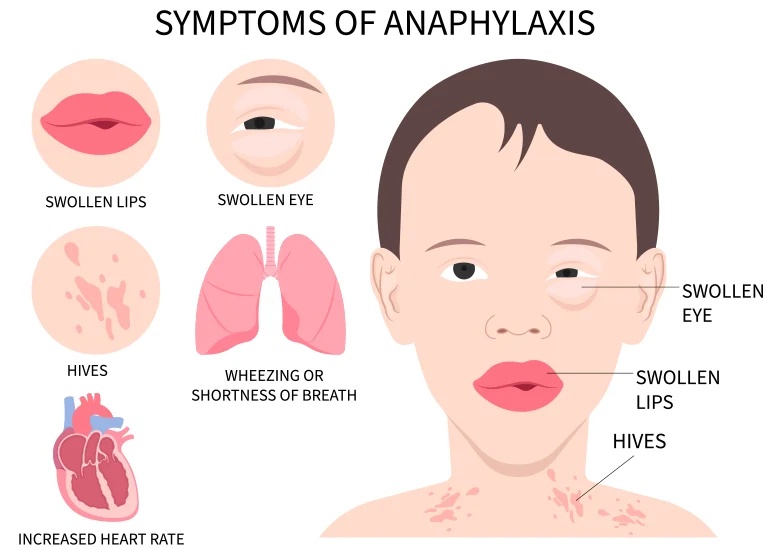
Rapid systemic immune response causing airway obstruction, shock, and organ involvement.
What Is Anaphylaxis?
Anaphylaxis is a severe and potentially life-threatening allergic reaction that occurs rapidly after exposure to an allergen. It affects multiple body systems at the same time, including the airways, cardiovascular system, skin, and digestive tract.
Unlike mild allergic reactions, anaphylaxis is a medical emergency and requires immediate treatment.
Why Does Anaphylaxis Occur?
Anaphylaxis happens when the immune system overreacts to an allergen and releases a large amount of histamine and other inflammatory chemicals into the bloodstream.
This sudden release causes:
Airway narrowing and swelling
A drop in blood pressure
Reduced oxygen delivery to vital organs
Without prompt treatment, these changes can quickly become dangerous.
Common Triggers of Anaphylaxis
Anaphylaxis is most commonly triggered by:
Food allergies (peanuts, tree nuts, shellfish, milk, eggs)
Insect stings or venom (bees, wasps)
Medications (antibiotics, painkillers)
Latex
Exercise-induced allergic reactions (rare, often food-related)
In some cases, the exact trigger may remain unknown.
Symptoms of Anaphylaxis
Symptoms usually develop within minutes of exposure but can sometimes be delayed.
Common signs include:
Difficulty breathing or wheezing
Swelling of the lips, tongue, throat, or face
Tightness in the chest or throat
Rapid or weak pulse
Dizziness, fainting, or collapse
Hives, itching, or flushed skin
Nausea, vomiting, or diarrhea
Not all symptoms need to be present for anaphylaxis to occur.
How Anaphylaxis Differs From a Mild Allergic Reaction
Mild allergies usually affect one system, such as the skin or nose. Anaphylaxis affects multiple systems at once and progresses rapidly.
Key differences:
Involves breathing or circulation problems
Symptoms worsen quickly
Does not resolve without treatment
If there is any doubt, it should always be treated as an emergency.
When to Seek Emergency Help
Immediate medical help is required if anaphylaxis is suspected.
Call emergency services right away if someone:
Has trouble breathing or swallowing
Collapses or loses consciousness
Has swelling of the tongue or throat
Experiences rapid symptom progression
Even if symptoms improve after initial treatment, medical evaluation is still necessary.
Carefully selected products that have helped thousands of people take control of their allergies. All recommendations are based on scientific research and real user experiences.
Join over 25,000 people who receive our weekly newsletter with the latest allergy research, product recommendations, and exclusive discounts on top-rated
Instant access to 50+ page comprehensive allergy guide
Weekly expert tips and product recommendations
Exclusive discounts and early access to new products
No spam, unsubscribe anytime. We respect your privacy.
Medical Disclaimer
We are not doctors, and this website does not provide medical advice. The information on this site is intended solely to help you understand what allergies are and explore potential approaches to managing them. This content should not be considered medical advice.If you have concerns about allergies or your health, please consult a qualified healthcare professional or specialist. Read more here.
Manage Consent
To provide the best experiences, we use technologies like cookies to store and/or access device information. Consenting to these technologies will allow us to process data such as browsing behavior or unique IDs on this site. Not consenting or withdrawing consent, may adversely affect certain features and functions.
Functional
Always active
The technical storage or access is strictly necessary for the legitimate purpose of enabling the use of a specific service explicitly requested by the subscriber or user, or for the sole purpose of carrying out the transmission of a communication over an electronic communications network.
Preferences
The technical storage or access is necessary for the legitimate purpose of storing preferences that are not requested by the subscriber or user.
Statistics
The technical storage or access that is used exclusively for statistical purposes.The technical storage or access that is used exclusively for anonymous statistical purposes. Without a subpoena, voluntary compliance on the part of your Internet Service Provider, or additional records from a third party, information stored or retrieved for this purpose alone cannot usually be used to identify you.
Marketing
The technical storage or access is required to create user profiles to send advertising, or to track the user on a website or across several websites for similar marketing purposes.