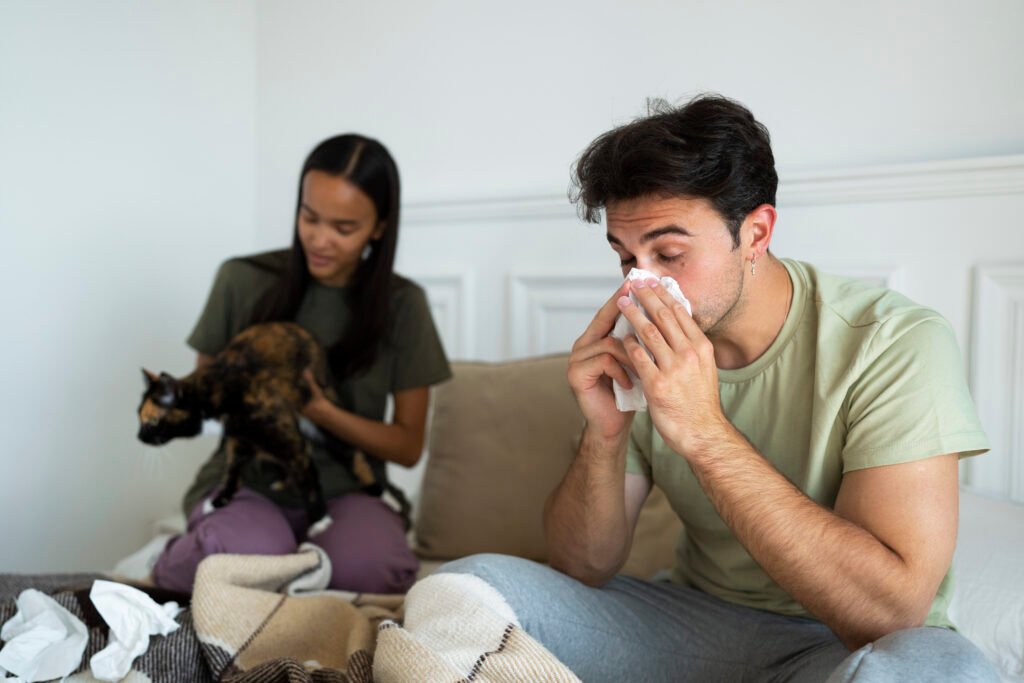
Pet allergies can affect your daily life more than you expect. On this page, you’ll find clear explanations, symptoms, causes, prevention steps, and practical solutions to help you manage pet allergies with confidence.
What You’ll Learn on This Page
What Are pollen allergies?
Pollen allergies occur when your immune system reacts to microscopic pollen grains released by trees, grasses or weeds. Because pollen travels on the wind, it can reach your nose, eyes or lungs even indoors.
This page explains causes, symptoms, what helps, common pollen types and practical steps to reduce your allergy burden.
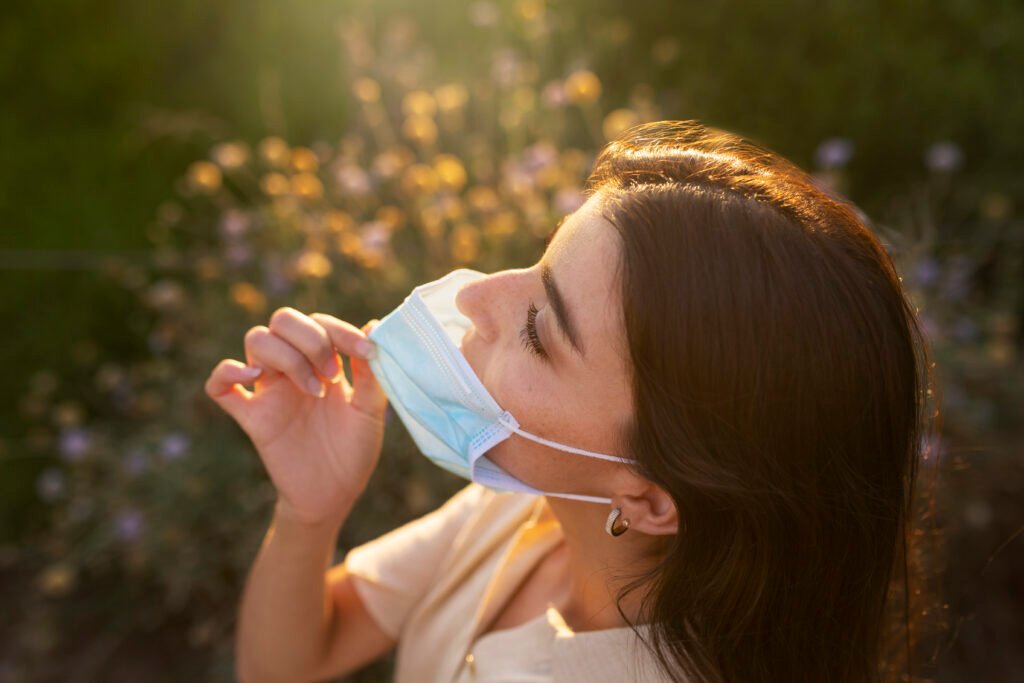
young beautiful woman sitting on grassland enjoy nature and fresh air happy.
Medical Disclaimer:
We are not doctors, and this website does not provide medical advice. The information on this site is intended solely to help you understand what allergies are and explore potential approaches to managing them. This content should not be considered medical advice.If you have concerns about allergies or your health, please consult a qualified healthcare professional or specialist. Read more here.
Why does pollen cause allergies
Pollen itself is harmless for most people. However, if you have a pollen allergy, your immune system treats pollen proteins as dangerous. Consequently it launches an inflammatory response producing histamine and other chemicals which triggers allergy symptoms.
Why do we have pollen allergies
Genetic predisposition and environmental factors determine whether someone becomes allergic. When pollen enters the nose or lungs and repeatedly triggers immune reactions, your body may become sensitized over time. Thus, many people experience seasonal patterns of pollen allergies tied to plant pollination cycles.
How to Prevent Pet Allergies
While you may not be able to eliminate pet allergens entirely, you can significantly reduce exposure and risk of symptoms. Use these prevention steps:
Create a pet-free zone in your home, ideally the bedroom.
Use a vacuum cleaner with a HEPA filter and clean carpets, upholstery and floors weekly.
Install an air purifier with HEPA filtration in main living areas.
Bathe or groom pets regularly to reduce shed dander and saliva residue.
Wash bedding, curtains and soft furnishings in hot water weekly.
Limit fabrics, rugs and heavy upholstery that trap allergen particles.
Consider pets with less fur, feathers or dander, but know there’s no truly hypoallergenic pet.
What Helps With Pollen Allergies
You can reduce the impact of pollen allergies by combining practical measures with supportive habits:
Keep windows closed during high pollen periods and use air conditioning or air filters.
Shower and change clothes after spending time outside to remove pollen from skin, hair and clothing.
Use a HEPA air purifier at home to reduce airborne pollen particles.
Use antihistamines, nasal sprays or other medications when symptoms arise (preferably under medical advice).
Monitor local pollen counts and plan outdoor activities when pollen exposure is lower.
Most Common Pollen Allergies
People with pollen allergies are most often sensitive to pollen from:
Trees (e.g. birch, oak, alder, hazel, ash) especially in spring
Grasses, often in late spring and early summer
Weeds (e.g. ragweed, mugwort) typically in late summer or fall Many people react to more than one pollen type, which can extend the allergy season significantly.
Types of Pollen Allergies
Pollen allergies can come from several plant groups. Each group releases pollen during specific seasons, which is why symptoms vary throughout the year. Below you’ll find the main types of pollen that commonly trigger allergic reactions.
It’s rare. Pollen allergies usually cause allergic rhinitis, a reaction in the nose and eyes, not a true fever. However, severe sinus irritations or secondary infections may raise body temperature.
Can pollen allergies cause a sore throat?
Yes. Post-nasal drip and mucus build-up can irritate the throat, leading to soreness or itchiness.
Can babies have pollen allergies?
Though less common than in older children or adults, babies can develop pollen allergies especially if there is a family history of atopy or if they are exposed to pollen early in life.
Can cats have allergies to pollen?
Animals such as cats (and dogs) can also react to pollen just like humans. Their symptoms may include sneezing, itchy or watery eyes, skin irritation or respiratory signs.
Can dogs have allergies to pollen?
Yes dogs can develop pollen allergies as well. Their symptoms may include sneezing, itchy nose or eyes, skin rash or increased scratching.
Why are pollen allergies worse at night?
Pollen that enters during the day can linger on bedding, clothing or hair. At night, when you’re lying down, inhalation of remaining pollen and post-nasal drip can increase symptoms.
Can you die from pollen allergies?
Almost never. Pollen allergies (hay fever / allergic rhinitis) are typically non-life-threatening. Severe complications are rare; only a systemic allergic reaction (very unlikely with pollen alone) would be life-threaten
Does rain help pollen allergies?
Yes rain can wash pollen out of the air temporarily, reducing exposure. However, after rain pollen can re-disperse, and damp weather can increase mold spores, another allergen.
Stay ahead of your allergies
Our newsletter helps you understand your body, your triggers, and what actually works. From natural remedies to the latest research every edition gives you tools to breathe, sleep, and live better.
Simple tips to ease your allergies
Expert advice you can trust
New articles straight to your inbox
No spam, unsubscribe anytime. We respect your privacy.