
We help you control your allergy
Skin Allergies
Skin allergies occur when the immune system reacts to harmless substances, leading to irritation, redness, or inflammation. Whether caused by seasonal pollen, chemical irritants, or food, understanding the cause is the first step to relief.
What are Skin Allergies?
A skin allergy is an immune response to a specific allergen. When your skin comes into contact with something it views as a threat, it releases histamines, causing inflammation.
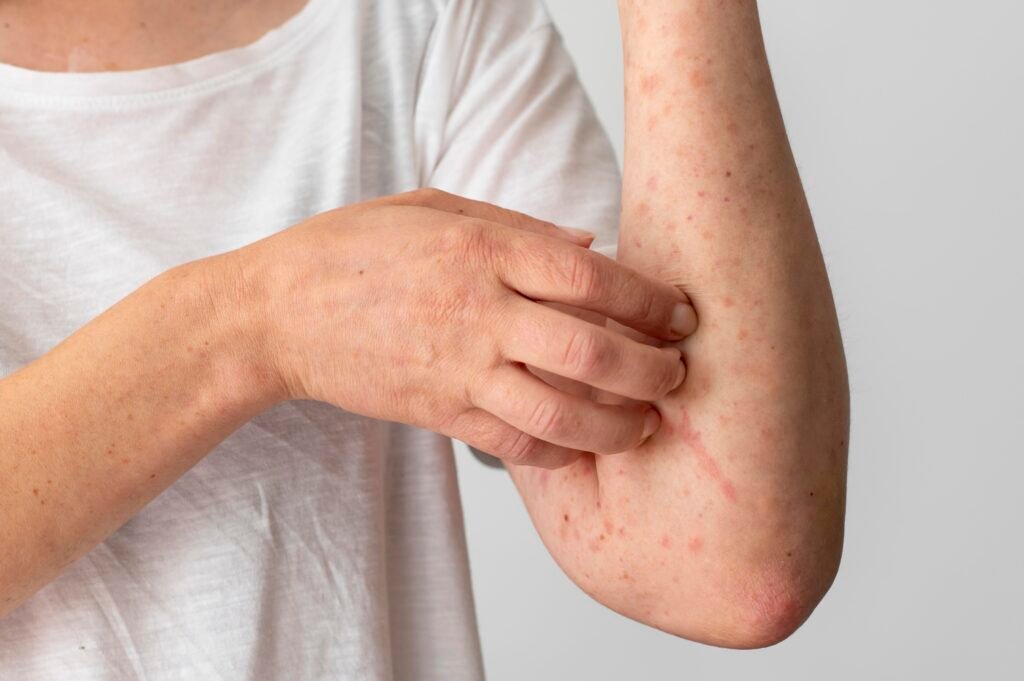
Symptoms of a skin allergy may include:
Redness and rash
Itching (often intense)
Swelling
Dry, cracked, or scaly skin
Blisters or oozing
Burning or stinging sensations
Common causes of skin allergies include:
Fragrances and preservatives in skincare and cosmetic products
Nickel or other metals in jewelry, zippers, or glasses
Latex found in gloves, balloons, or medical equipment
Certain foods, including shellfish, nuts, and dairy
Prescription or over-the-counter medications
Sun exposure (especially when combined with certain chemicals)
Environmental triggers like pollen, pet dander, or dust mites
Skin Allergy Types: Identifying the Reaction
Different types of skin allergies have different causes and symptoms. Understanding which type you’re dealing with is crucial for effective treatment and prevention.
1. Eczema (Atopic Dermatitis)
A chronic condition that causes dry, itchy, and inflamed skin. Often linked to genetics and environmental factors, eczema is common in children but can persist into adulthood. It’s often associated with asthma and seasonal allergies.
2. Contact Dermatitis
Occurs when the skin comes into direct contact with an irritant or allergen. This condition is divided into:
Irritant Contact Dermatitis: Caused by repeated exposure to a mild irritant (like soap or detergent).
Allergic Contact Dermatitis: Caused by an allergic reaction to substances such as nickel, fragrances, or poison ivy.
Symptoms include redness, itching, swelling, and sometimes blisters or sores.
3. Hives (Urticaria)
Hives are itchy, raised welts that appear suddenly on the skin. They can be triggered by foods, medications, insect stings, heat, stress, or unknown factors. Acute hives last less than six weeks, while chronic hives persist longer and may require medical evaluation.
4. Photosensitivity (Sun Allergy)
An abnormal skin reaction to sunlight, sometimes caused by medications, skincare ingredients (like retinoids or citrus oils), or autoimmune disorders. Symptoms may include rash, itching, or blisters after sun exposure.
5. Seborrheic Dermatitis and Psoriasis
While not true allergies, these chronic conditions are often mistaken for allergic reactions. They can involve red, flaky, itchy skin, and may coexist with other allergic conditions.
Tips for Managing Skin Allergies
Preventing flare-ups and managing symptoms involves daily care and lifestyle adjustments. Here are practical tips to help you stay comfortable and in control:
Avoid known triggers: Keep a diary to identify patterns and triggers. Patch-test new skincare or cosmetic products before use.
Keep skin moisturized: Apply a gentle moisturizer daily, especially after bathing, to lock in moisture.
Use lukewarm water: Hot water can strip your skin of its natural oils and worsen irritation.
Wear breathable clothing: Stick to natural fabrics and avoid rough textures that can irritate sensitive skin.
Manage stress: Practice relaxation techniques such as meditation, yoga, or deep breathing exercises.
Keep fingernails short: To prevent infection from scratching.
Consult a dermatologist: Persistent or severe symptoms require professional diagnosis and treatment.
What You’ll Learn on This Page
All Types of Skin allergies
To treat your skin correctly, you must identify which type of allergy you are experiencing.

Frequently Asked Questions (FAQ)
What is the most common skin allergy?
Eczema (atopic dermatitis) is one of the most common skin allergies, especially among children. It often appears as dry, red, itchy patches on the skin and can be triggered by allergens, stress, or irritants.
Can skin allergies go away on their own?
Some mild skin allergies may resolve without treatment once the allergen is removed. However, chronic conditions like eczema or contact dermatitis often require ongoing care and management.
Are skin allergies contagious?
No, skin allergies are not contagious. You can’t catch them from another person. They are caused by your own immune system’s response to a substance.
How are skin allergies diagnosed?
Diagnosis is typically made through a physical exam and medical history. In some cases, dermatologists may use patch testing, allergy testing, or skin biopsies to confirm the cause.
What ingredients should I avoid in skincare if I have sensitive skin?
Avoid fragrances, parabens, alcohol, essential oils, sulfates, and dyes. Look for products labeled as “hypoallergenic” or “dermatologist tested.”
When should I see a doctor about a skin allergy?
See a doctor if your symptoms are severe, spreading, not responding to over-the-counter treatments, or if you experience other symptoms like fever, infection, or breathing difficulties.
How do I stop my skin allergy from itching?
Cool the area immediately with a cold compress or cool water. Apply a moisturizing cream to repair the dry skin barrier and consider taking an antihistamine if the itching is severe.
Can allergies cause dry skin on the face?
Yes, especially around the eyes and nose. Airborne allergens like pollen or dust mites can irritate the thin skin on the face, leading to redness, dryness, and flaking.